







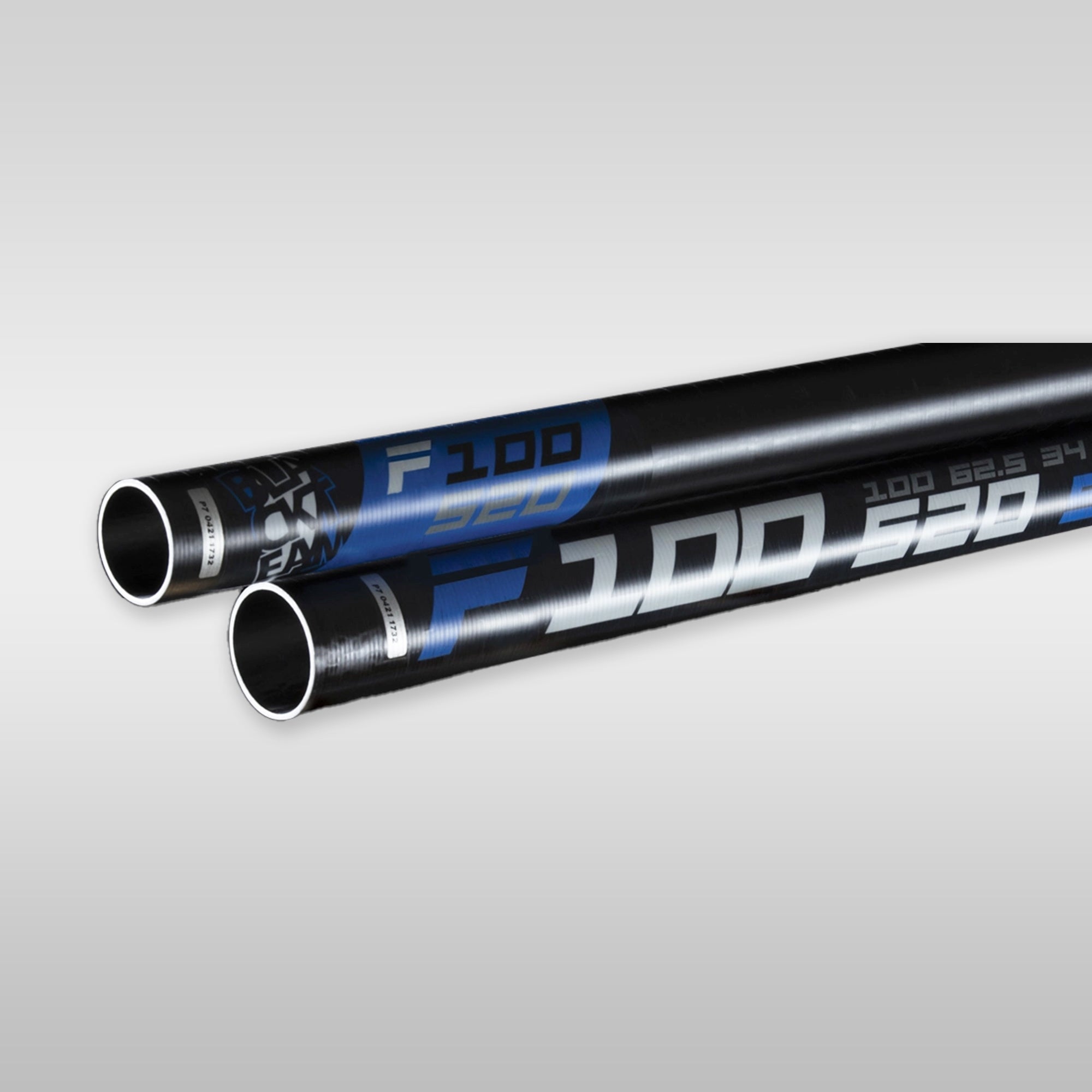
We present the Point-7 F100 mast.
SONIC REFLEX MAST F100
COMMITTED TO FLY.
DOES A FOIL MAST ABSORB CHOP?
DOES THE PROFILE, OUTLINE, AND LEACH LINE OF A FOIL SAIL LOOK LIKE A NORMAL FIN SAIL?
DOES A FOIL SAIL HAVE THE SAME PRESSURE AS A FIN SAIL?
That’s why at Point-7, we’ve decided to develop dedicated masts to enhance the performance of our foil sails—exclusively for those who refuse to compromise on performance.
WHY THIS MAST:
- A foil sail glides smoothly over the water, and the mast does not need the reflex of a slalom sail; instead, it needs to increase the rig’s stability to help maintain the foil’s balance.
- A foil sail is cut without a back hand, and if the mast can accommodate this characteristic, it will give the sail a wider range.
- Since the luff lengths of foil sails differ from those of slalom sails, the reinforcements must follow the luff curve to enhance performance across the sail’s various sections.
- Generally, a foil mast can be stiffer in the IMCS to lock the sail’s profile forward, drastically reducing the power of the back hand—exactly the opposite of a fin sail.
COMPATIBILITY:
WHAT HAPPENS WHEN YOU USE A FOIL MAST WITH A FIN SAIL?
The profile will increase at the front, shifting the pressure point further forward—which means power will be drawn away from the back hand. When this happens on the water, the sail will feel less responsive because you won’t be able to transfer power to the fin to accelerate, and you’ll lose stability and wind range. The sail will feel stiffer and less responsive. We do not recommend using a foil mast on a fin sail.
WHAT HAPPENS WHEN YOU USE A FIN MAST IN A FOIL SAIL?
The sail will perform well until the wind picks up. At that point, the power in your back hand will increase, and the foil’s stability will decrease. The wind range will be narrower when the wind is strong, and some stability will also be lost in lighter conditions. We still recommend using it if you’re not interested in a dedicated mast.


